
So, what type of Engineer you want to become? And what type of qualification does that position needs exactly? We are here to provide you the answers to all these questions, take a look:
To choose the type, you have to understand the process of certification that is available to you.
The European Aviation Safety Agency or EASA is the organization that regulates all the activity related to aviation within Europe. Furthermore, it delegates this authority of regulation implementation to the National Aviation Authorities. In our case, it is CAA or UK Civil Aviation Authority.
In order to assure the safety of this industry, just like pilots and air traffic controllers, engineering personnel is licensed. When it comes to license, there are several categories that cover different routes, disciplines, and levels.
There are two types of license:
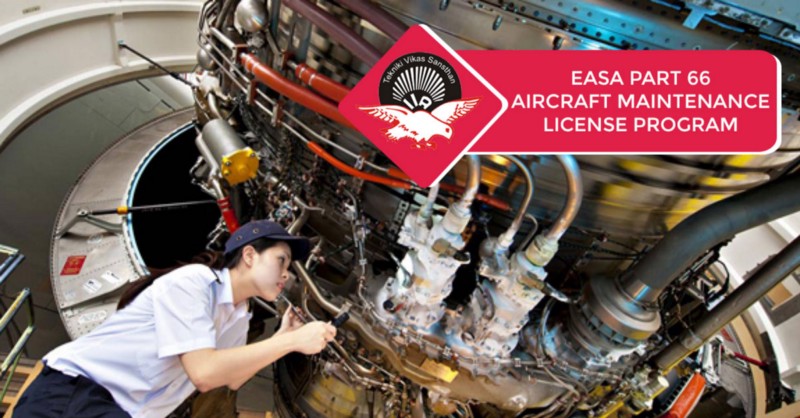
Category A License: To become a line or ramp maintenance certifying mechanic, you need this license. After graduating a 6 month approved course and certified experience of 1 year, you attain this license. This license makes you qualified to work on the operational aircraft where you perform relatively minor maintenance tasks.
Category B License: A category B licensed person becomes a base maintenance certifying technician who is qualified to work on aircraft and perform complex maintenance tasks. After completing graduation with a two year approved course and 2 years of certified experience, you can attain this license.
This category is further divided into other parts of specialist skills as in avionic or mechanical.
B1.1 : According to EASA, the Aircraft Maintenance License category B1.1 allows the holder of this license to issue the certifications of release to service and following maintenance that includes aircraft structure, electrical systems, mechanical systems and power plants.
This course lasts for about 2,400 hours that are delivered on a modular basis or as a singular course, for the beginners. As for Candidates with work experience, can go for a modular course which can be complete as a single block within 52 days.
In this course, you learn about airplanes with turbine engines. Turbine engines are also known as combustion turbines and jet engines are the rotary engines that basically extract energy from the flow of combustion gas.
B 1.2: In this course, the airplanes with piston engines are covered. Piston engines also known as reciprocating engines use the same technology as motorcycles and cars on a fundamental basis.
B1.3 and B1.4 : Here, you learn about rotary wings of helicopters with turbine and piston engines.
Category B2: It covers avionics that is the electric systems fitted to all the aircrafts. So, if you are electronically oriented and interested in becoming an Avionics Engineer with a specialization in the modification, restoration and maintenance of navigation, guidance, radar equipment, control systems and communication, go for this category license.
There are different routes and benefits that all depends on education and experience, so learn about it and make the right choice.
IIA Delhi is the top ranking Aircraft Maintenance Engineering Institute in India, is an European Aviation Safety Agency approved Aircraft Maintenance Training Organisation having approval number EASA.147.0127 offers a flexible, short, modular programme that provides basic training in Category B1.1 (Aeroplane fitted with Turbine Engine) as per the requirements and standards stipulated in Part — 66.
 IIA Groups
Leave a comment